How to Record Your Parents' Life Story: A Simple Guide
A simple guide to recording your parents' life story, from planning and audio setup to interview tips and saving it.
8 min read
You have probably heard your parents tell the same handful of stories for years. The time the car broke down on the way to the beach. The first apartment with the leaky roof. The job they almost took in another state. Those stories feel permanent because you have heard them so often, but they live only in memory, and memory is fragile. If they are never recorded, they will eventually fade, and with them the details only your parents know.
Recording a parent's life story does not require a film crew, a professional historian, or a weekend retreat. It requires a plan, a quiet room, a phone, and a willingness to listen more than you talk. Organizations like the Library of Congress and StoryCorps publish practical interviewing guidance, and most of it translates easily to a family setting.
There may be benefits for your parents as well. A 2021 systematic review in Frontiers in Psychology found that reminiscence therapy, a structured practice of recalling past events, feelings, and thoughts, significantly reduced depressive symptoms in older adults, though the authors noted limitations in the available studies. A family interview is not therapy, but being invited to tell your story to someone who genuinely wants to hear it can be a meaningful experience in its own right.
This guide walks you through how to record your parents' life story from start to finish: planning the sessions, setting up for good sound, asking questions that draw out real stories, and preserving the recordings so your family can hear them for generations.
Before You Start: Plan the Sessions
It is tempting to try to capture an entire life in one sitting. A full life story is too much for a single conversation, and both of you will run out of energy long before you run out of material. Plan for a series of sessions instead.
A simple way to organize them is by life stage. One session might cover childhood and family roots. Another might cover school, early jobs, and leaving home. Others can focus on marriage and raising a family, career and accomplishments, hard seasons, and finally reflections and advice for future generations. Breaking it up this way gives each conversation a clear focus and makes the recordings easier to navigate later.
For each session, write a short list of questions ahead of time. A family oral history guide published on the Library of Congress website recommends keeping questions short and avoiding ones that can be answered with a simple yes or no. It also suggests researching the time period and major events in the person's life, and even doing a brief pre interview, so you know which topics to explore. For a parent, that might mean pulling out old photos, documents, or a family tree before you sit down.
The same guide recommends keeping formal interviews to roughly 60 to 90 minutes, and StoryCorps similarly suggests setting aside about an hour for a recorded conversation in its recording guide. For many older parents, shorter sessions may be more comfortable.
Finally, talk with your parent about what you are doing and why. The Oral History Association describes informed consent as an ongoing process, not a one time signature. In a family context, that means explaining who will hear the recordings, letting your parent skip any topic, and checking in along the way. Knowing how their words will be used can help your parent relax and speak freely.
Setting Up for Good Audio and Video
You do not need professional equipment. A modern smartphone records clear audio when it is used well. What matters most is the room, the placement, and a few minutes of preparation.
Choose a quiet, comfortable place. The Veterans History Project recommends a comfortable, quiet location, ideally the narrator's own home. Avoid rooms with a television, a humming refrigerator, or a busy window.
Test your equipment first. Record a short practice clip, play it back, and adjust before your parent sits down. The Library of Congress family guide lists testing equipment as part of planning.
Silence notifications. StoryCorps advises turning off notifications on your devices so calls and alerts do not interrupt the recording.
Charge everything. A dying battery in the middle of a great story is a frustration you can easily avoid.
Place the phone close to your parent. Set it on a stable surface nearer to them than to you, so their voice is the clearest sound in the recording.
Open with an introduction. The Library of Congress guide suggests beginning each recording by stating the date and place, your name, your parent's name, and the topic. Future listeners will thank you.
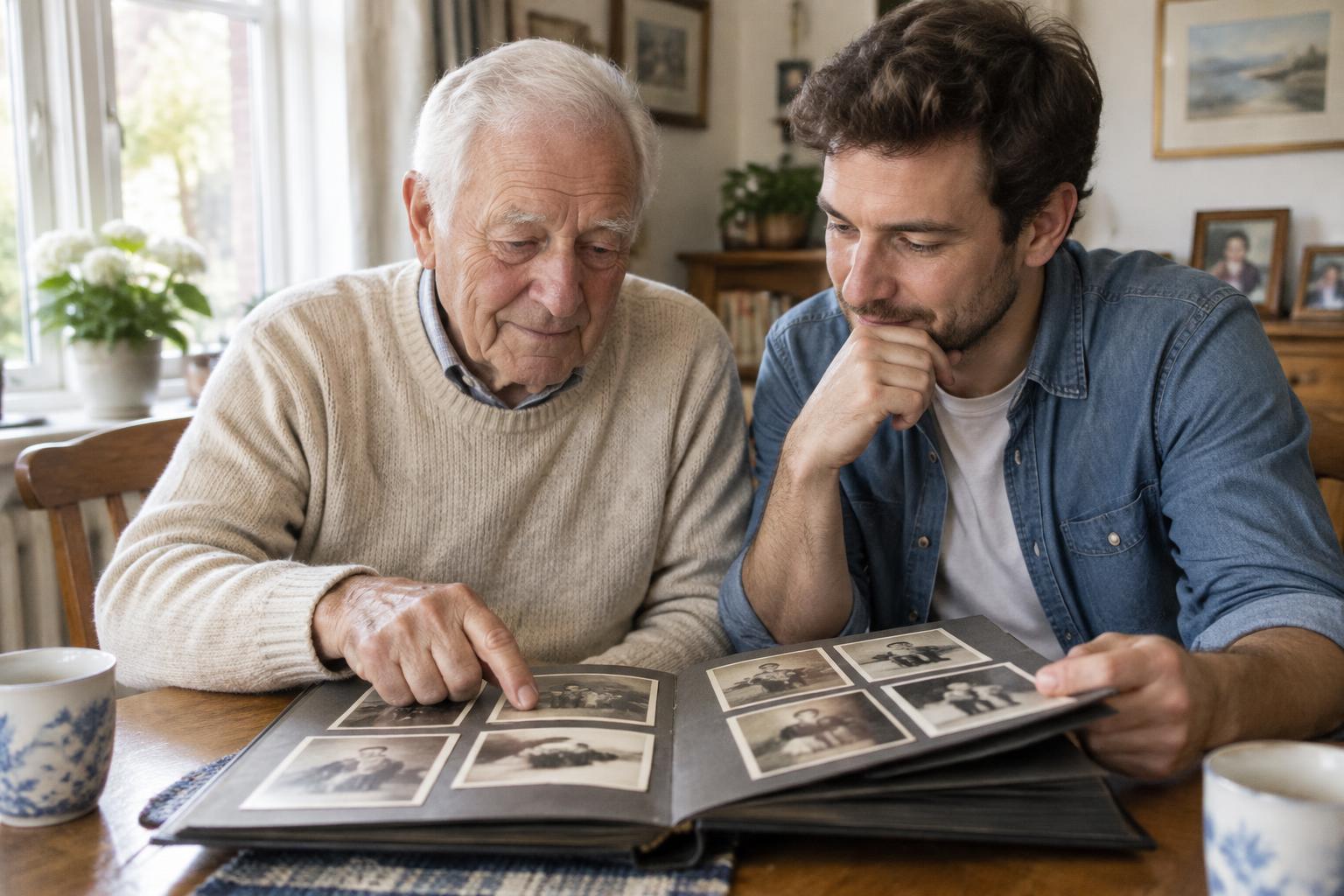
Keep photos within reach. The Veterans History Project suggests using old photographs to prompt memories, and the same works with any family album.
For video, keep it simple. Sit your parent in soft, natural light facing a window rather than with their back to it, and frame them from the chest up.
If you cannot be in the same room, a phone or video call can still work. StoryCorps recommends a strong internet connection and headphones when the two people are in different places.
Interviewing Techniques That Draw Out Real Stories
The difference between a list of facts and a life story is how you ask and how you listen. These techniques come from established oral history guidance and work just as well at a kitchen table.
Ask open questions. Instead of "Did you like your first job?" try "Tell me about your first job." The Library of Congress family guide specifically warns against questions that can be answered with yes or no.
Ask about feelings, senses, and people. The Veterans History Project encourages questions about emotions, senses, and relationships. "What did your childhood kitchen smell like?" often unlocks more than "Where did you live?"
Follow the thread. The best material often comes from follow up questions that build on what your parent just said, which the Veterans History Project calls active listening.
Do not interrupt. The Library of Congress guide advises encouraging the speaker without cutting them off. Nod, smile, and save your reactions for natural pauses.
Get comfortable with silence. A pause usually means your parent is remembering. Count to five in your head before jumping to the next question.
Ask for specifics. When a story is vague, gently ask for a name, a date, a place, or a detail. "What year was that?" and "Who else was there?" add context future listeners will need.
Watch for fatigue and difficult emotions. The Veterans History Project puts the narrator's comfort first and says it is fine to pause or end an interview. Hard memories deserve patience, not pressure.
Take brief notes. Jot down names, places, and topics as you go, which the Library of Congress guide recommends. Your notes become a simple index for each recording.
Above all, remember whose story it is. Your role is to make space for your parent to talk, not to correct their memory or fill in the parts you think you already know. Sometimes the version they tell will surprise you, and that surprise is part of what makes the recording valuable.
After the Interview: Label, Preserve, and Share
The work is not finished when you stop recording. A pile of unlabeled audio files is almost as hard to use as no recording at all, so take a few minutes after every session to organize what you captured.
Start by naming each file clearly with your parent's name, the date, and the session topic, such as "Mom childhood and family roots, October 2026." Add your notes from the session to the same folder. The Veterans History Project uses a simple recording log to summarize the main topics of each interview and notes that a full transcript is not required, which is a helpful standard for families too. A short list of topics with rough timestamps is enough to help someone find a favorite story years from now.
Next, make copies. Keep at least one copy in a cloud service and another on a separate device, so a single lost phone or failed hard drive cannot erase everything. Then share. The Library of Congress family guide suggests listening to the recording together and talking about the experience as a family, which is also a great way to discover what questions to ask in the next session.
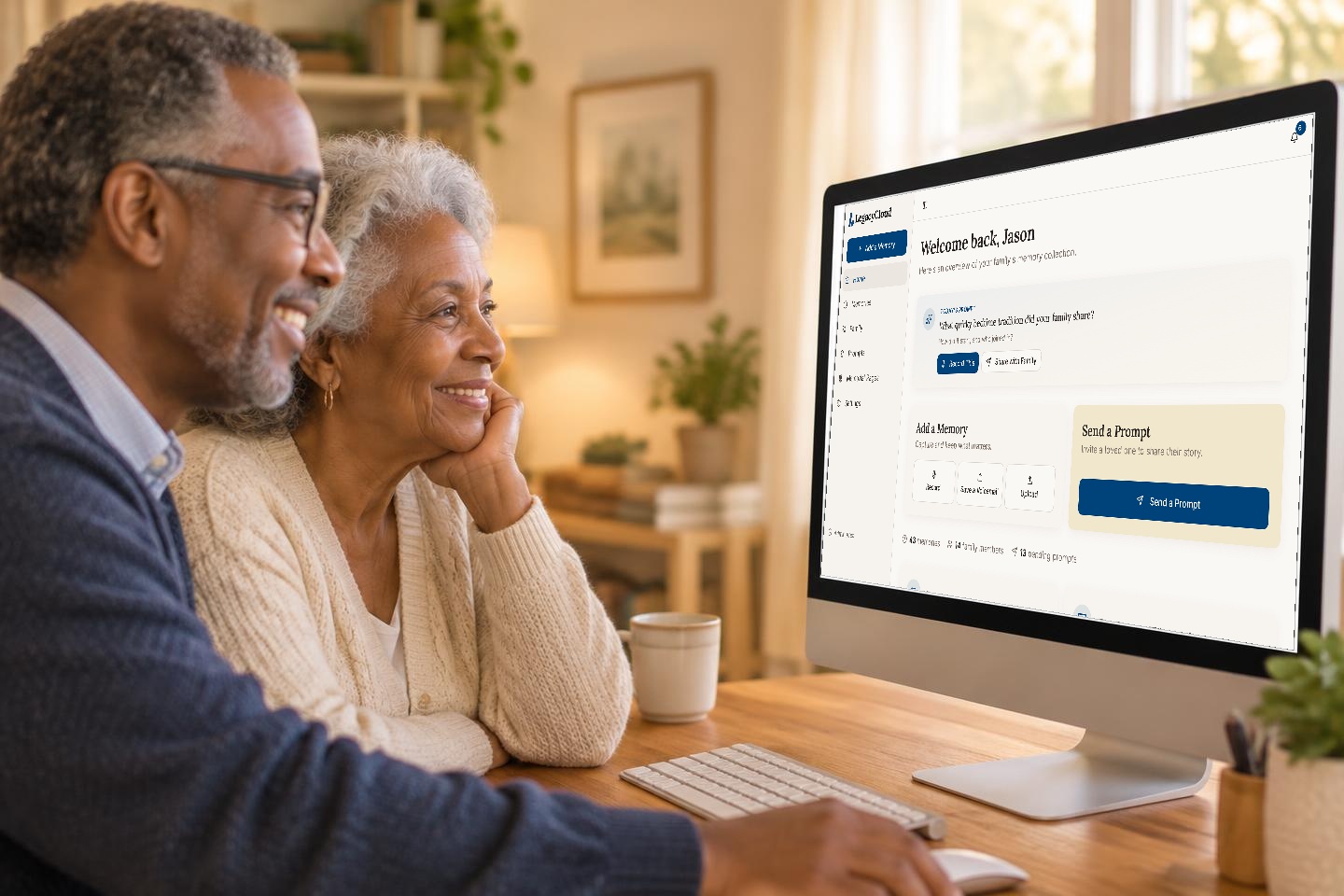
LegacyCloud was designed to make this part easy. You can record each session directly in LegacyCloud using one large button on your phone or computer, and every recording is organized on a timeline so your parent's story unfolds decade by decade. You can also upload the photos, videos, and voicemails you already have. You can invite siblings and other relatives to listen and add their own memories, and if your parent lives far away, you can send them a question by text or email and they can record their answer from a simple link. Instead of a folder of files on one person's phone, your family ends up with a shared collection everyone can return to.
Start This Week
You do not need to have every question ready or every session planned before you begin. The most important step is the first one. Call your mom or dad this week, tell them you would love to hear more about their life, and schedule a time to sit down together. Start with childhood, because it is the easiest place to begin and often the most fun.
One recorded hour this month is worth more than a perfect plan that never happens. If you need a starting point, our guide to questions to ask your grandparents works just as well for parents.
Start your free 7 day trial of LegacyCloud, no credit card needed, and record the first chapter of your parent's story.