Questions to Ask Your Grandparents Before It's Too Late
Use these 40 questions to ask your grandparents about childhood, love, and life lessons, plus tips to record their answers.
9 min read

Most of us know the outline of our grandparents' lives. We know where they live now, maybe the town where they grew up, and a handful of stories that get retold at every holiday dinner. What we usually do not know is everything in between: how they felt the day they left home, what their own grandparents were like, or the hard season of life they rarely bring up. Those details almost never come out on their own. They come out when someone asks.
The problem is that asking can feel awkward, and it is easy to assume there will always be time later. Even Dave Isay, the founder of the oral history nonprofit StoryCorps, has said he regrets not asking his own grandparents certain questions while he had the chance, according to an interview published by TED Ideas. If someone who has spent his career recording other families' stories missed that window, the rest of us can too.
This guide gives you 40 questions to ask your grandparents, moving from easy warm ups to deeper reflections on love, work, hardship, and wisdom. You will also find practical advice, drawn from established oral history guidance, for having the conversation and saving their answers in their own voice. You do not need special equipment or interviewing experience. You need a few good questions, a quiet hour, and a willingness to listen.
Why These Conversations Matter
Asking your grandparents about their lives is more than a sentimental exercise. Research suggests it can benefit both the younger generation doing the listening and the older generation doing the telling.
At Emory University, psychologists Robyn Fivush and Marshall Duke, working with Jennifer Bohanek, developed a 20 question measure called the "Do You Know?" scale. It asks young people whether they know things like how their parents met or where their relatives grew up and went to school. In a study of 66 adolescents ages 14 to 16, teens who knew more of their family's stories reported higher emotional well-being and a stronger sense of identity, and that connection held even after the researchers accounted for overall family functioning, as Phys.org reported on the Emory study. The researchers were careful to note that this was an early study and more research is needed. Even so, it suggests that family stories help young people understand where they come from and who they are.
Notice how many of those questions lead back to grandparents. A child cannot know where Grandma grew up unless someone asked her and passed the answer along. Every conversation you record becomes part of the story the next generation inherits.
The benefits may run in the other direction as well. Reminiscence, the practice of recalling past events, feelings, and thoughts, is used as a structured therapy with older adults. A 2021 systematic review published in Frontiers in Psychology analyzed 10 randomized controlled trials and found that reminiscence therapy significantly reduced depressive symptoms in older adults (Liu et al., 2021). The authors also flagged real limitations, including inconsistent methods across studies and short follow up periods, so a family conversation should never be confused with clinical treatment. Still, the research points in a hopeful direction: being invited to tell your story, and having someone genuinely listen, can matter.
Then there is the simple matter of time. Stories that nobody asks about are rarely passed down. A recording made today, in your grandparent's own voice, preserves something that a family tree or a photo album cannot.
Questions About Childhood, Family Roots, and Growing Up
Start with the easy material. Questions about places, people, and everyday routines are comfortable to answer, and they warm up memory for the deeper conversation that follows. Do not rush through them, because small details often open the door to the best stories.
What is your earliest memory?
Where were you born, and what was the house you grew up in like?
What did your parents do for work?
What were your own grandparents like?
Where did our family live before that, and how did they end up where you grew up?
How did you get your name?
What was an ordinary day like when you were about ten years old?
What chores were you responsible for as a kid?
What games did you play, and who did you play them with?
What was your favorite meal growing up, and who made it?
How did your family celebrate holidays?
What was school like for you, and did you have a favorite teacher?
Who was your best friend growing up, and what did you two do together?
What did you get in trouble for as a kid?
What music were you listening to as a teenager?
What big world events do you remember living through, and how did they affect your family?
What was your first job, and what did it pay?
What was the first big thing you saved up to buy?
When did you first leave home, and where did you go?
What is something about your childhood that would surprise me?
If an answer sparks something, follow it. A simple question about a favorite meal can turn into a story about a great aunt, a family recipe, or a hard year when there was not much food on the table. Those detours are often the most valuable part of the conversation.
Questions About Love, Work, Hard Times, and Life Lessons
Once the conversation has some momentum, you can move into more personal territory. These questions ask your grandparents to reflect, not just recall, so give them room to think. Watch for signs of discomfort, and remember that it is always fine to skip a question and come back to it another day.
How did you meet Grandma or Grandpa?
What was the first thing you noticed about them?
What do you remember most about your wedding day?
What do you remember about the day my mom or dad was born?
What was my parent like as a child?
What was the hardest part of raising a family?
What work are you proudest of?
If you could have chosen any career, what would it have been?
What was the most difficult season of your life, and how did you get through it?
Who helped you most when things were hard?
Is there a decision you would make differently if you could?
Where did your most important values come from?
What is the best advice anyone ever gave you?
What has changed the most about the world since you were young?
What do you think my generation gets right, and what do we miss?
Which family traditions do you hope we keep going?
What makes you happiest these days?
What are you most grateful for?
What do you want your great grandchildren to know about you?
Is there anything you have always wanted to tell me but never had the chance?
The last few questions tend to produce the answers families treasure most, because they are words spoken directly to the people who will listen years from now. Save them for when your grandparent is relaxed and the conversation feels unhurried.
How to Have the Conversation and Save Their Answers
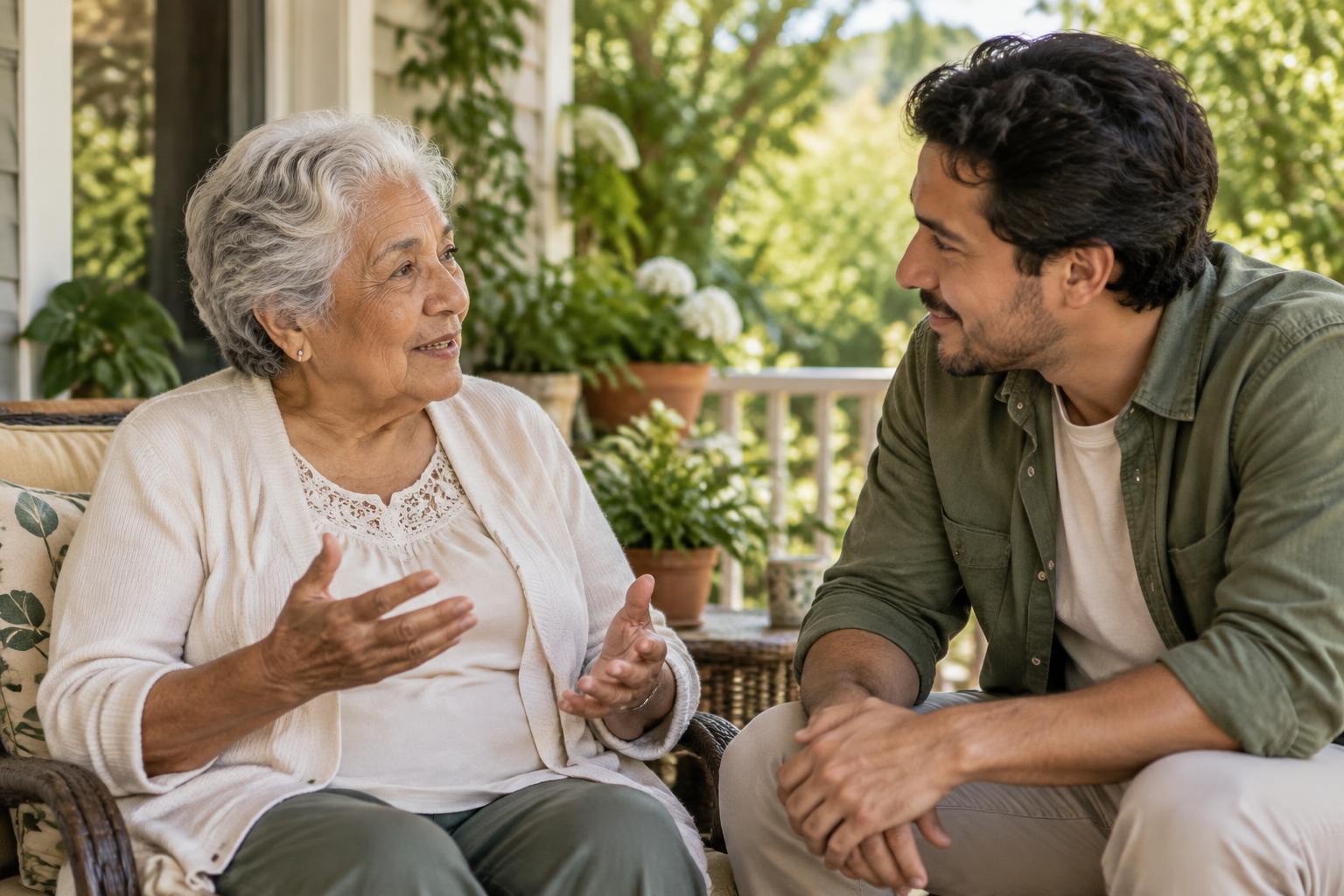
Good questions are only half of the job. How you set up the conversation shapes what you hear. A family folklore interviewing guide hosted by Smithsonian Education recommends talking in natural settings such as family dinners, reunions, and holidays rather than staging a formal interview. If you want time alone with a grandparent, the guide suggests pairing the conversation with something low key, like a walk or baking together. People tend to open up when they feel like they are visiting, not being questioned.
The same guide offers a few other practical reminders that are worth following. Older adults can tire quickly, so end the session at the first sign of fatigue and plan to pick it back up another day. Bring along photo albums, letters, scrapbooks, or old home movies, because objects are powerful memory triggers. Avoid long strings of yes or no questions, which can make a loved one feel interrogated, and favor open questions that invite a story. Finally, label what you record with names, dates, and places as soon as possible, while the details are still fresh. The guide also notes that the person telling the story holds the rights to it, so it is a respectful habit to ask permission before you share a recording outside the family.
When it comes to saving their answers, audio or video beats handwritten notes every time. Notes capture facts, but a recording keeps the things that make a person who they are: the pauses, the laughter, the way they say your name. A smartphone is enough to get started. Sit close, choose a quiet room, and put the phone nearer to your grandparent than to yourself.
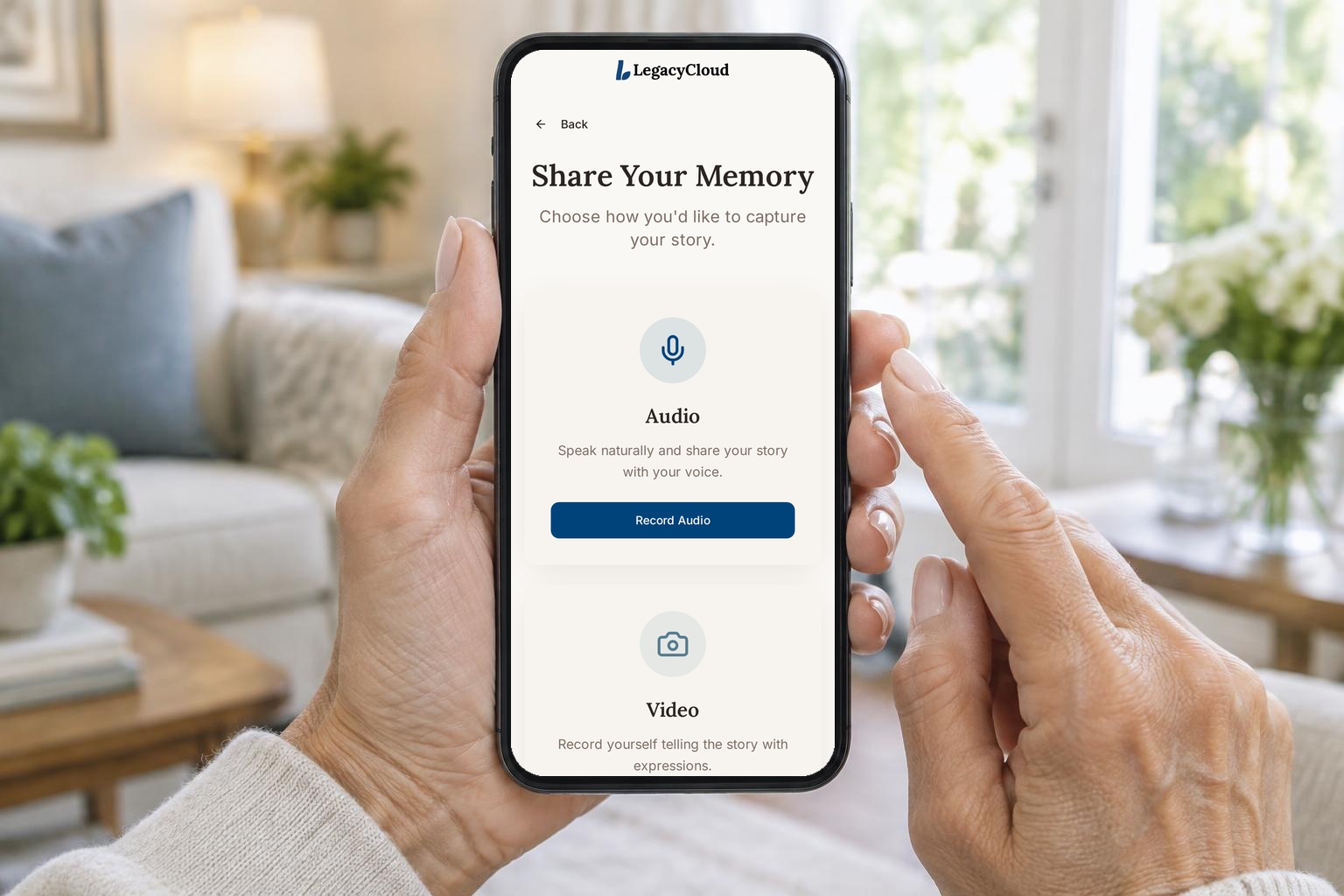
This is exactly why we built LegacyCloud. If you are sitting together at the kitchen table, you can open LegacyCloud on your phone and record their answers with one large, easy button. If your grandparents live far away, you can send any question from this list by text message or email, and they can record a reply by tapping a link, with no app to download. Every answer is saved to your family's collection and organized on a timeline, so the stories are easy to find years from now. You can also upload voicemails, photos, and videos you already have, and when the whole family gathers for a birthday, anniversary, or reunion, a single link or QR code lets everyone add their own memories. You can explore all of these options on our Ways to Use page, or browse our story prompts for more question ideas.
Start With One Question
You do not need to get through all 40 questions in one sitting, and you should not try. Pick two or three that feel natural, ask them at your next visit or phone call, and let the conversation go wherever it wants to go. Then come back for more. Over a few months, those small conversations add up to something your family will treasure for generations.
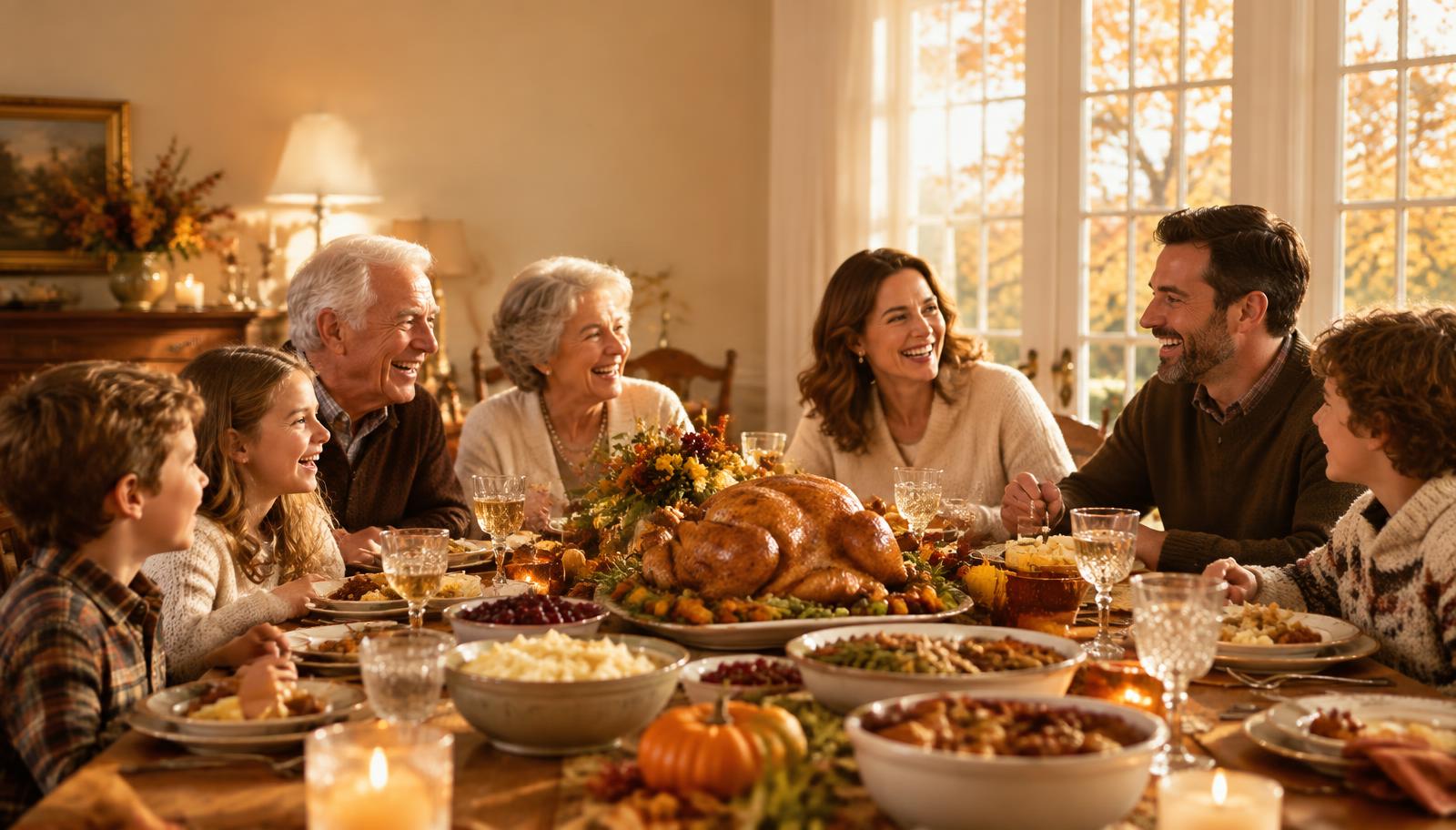
The holidays are a natural place to begin. When everyone is gathered around the table, ask a grandparent how they celebrated when they were young, and hit record. Their answer might be the start of a story your grandchildren hear in their voice someday.
The stories we save today become the heirlooms of tomorrow. Start your free 7 day trial of LegacyCloud, no credit card needed, and send your first question today.